

1. Introduction
Imagine a moment where you’re indulging yourself in a delicacy, enveloped by an intoxicating aroma, overwhelmed by a taste that engages your senses in a symphony of indulgence. That velvety texture that melts so smoothly on your tongue, swirling around and releasing a rush of tantalizing flavors – that is the magic of chocolate. Now, what if I told you, you could be the creator of that magic? This post is all about taking you into the heart of the chocolate world and teaching you to make your very own exquisite chocolate truffles. So, let the chocolate adventure begin!
2. The Truffle Overview
To appreciate the art of making chocolate truffles, we must first delve into what they really are. Truffles are bite-sized chocolate delicacies, usually shaped as spheres. Their core, known as ganache, is a mixture of chocolate and cream guitar by its outer shell of tempered chocolate. The process of making these chocolaty gems may sound daunting but rest assured, with our step-by-step guide through the journey from cocoa beans to truffle, you’ll soon be a bona fide chocolatier. Remember, the dream of luxurious homemade chocolate truffles can become a reality one mix, dip, and roll at a time.
3. Practical Tips, How-Tos, and Actionable Advice
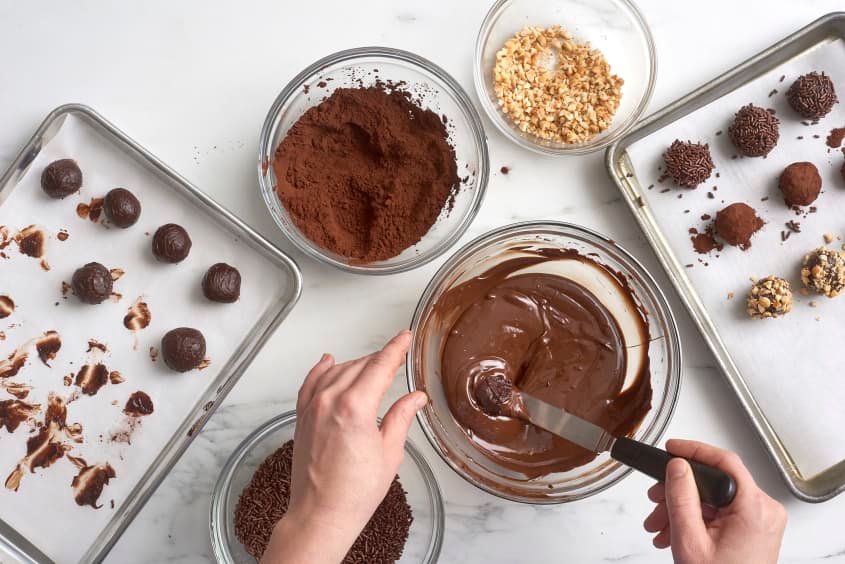
Ready to embark on your journey towards truffle perfection? Let’s break down the process. You will start by making a ganache. For this, you’ll need high-quality dark chocolate and just enough cream to achieve a firm yet pliable texture. Once the ganache is cooled and ready, you’ll scoop out small, uniform portions and roll them into balls—a pair of latex gloves will be great for this. And here’s a pro tip: refrigerate your ganache balls for a few hours for easier handling during the coating process. You’ll then coat your truffles using a process called tempering, which gives your truffles a smooth, shiny finish and a satisfying snap. Want to add a personal touch? Customize them by rolling the finished truffles in your choice of toppings; think cocoa powder, finely chopped nuts, or desiccated coconut!
4. Why It’s Relevant to Chocolate Lovers
Mastering the art of truffle-making signifies a deeper appreciation for the world of chocolates. From understanding the importance of every ingredient and their complexities, to executing perfect tempering, you’ll deepen your bond with this beloved bean. Moreover, creating your own chocolate truffles is not just about making a treat, it’s about crafting a sensory experience that you can share with your loved ones. So, are you ready to become an artisanal truffle expert and elevate your chocolate game?
5. Fun Facts and Educational Extras
While you whisk, stir, and temper, let’s sprinkle some fun and enriching chocolate trivia into the mix! Did you know the name ‘truffle’ is derived from the edible fungi known as truffles because of their similar appearance? Fascinating, isn’t it? Also, truffles have long been associated with luxury and are often given as gifts due to their exquisite taste and elegant presentation. Hungry for more chocolate knowledge? Dive into books like “Bean to Bar Chocolate: America’s Craft Chocolate Revolution,” or watch documentaries like “The Dark Side of Chocolate” to gain a broader view of this delightful world.
6. Conclusion
You’ve twirled through the dance of chocolate-making, followed the cadence of the process, and hopefully by now, seen how a humble cocoa bean transforms into a delightful chocolate truffle. Next time a chocolate craving strikes, channel your inner chocolatier and embark upon the exciting journey of truffle-making. Remember, chocolate beneath all its goodness, is about experiencing joy and spreading it. So, share the fruits of your labor with your friends and family, and don’t forget to share your truffle adventures with us in the comments below! For now, as we always say, keep calm and truffle on!
SEO Considerations: Use primary keywords e.g. “Homemade Chocolate Truffles” and “Making Truffles”. Include related terms e.g. “tempering chocolate,” “dark chocolate truffles,” and “ganache.” Internal Links would direct to other blog posts about “chocolate pairing suggestions” or “choosing the right chocolate”. External Links can reference “the process of making chocolate” or “history of truffles”.
Tone & Style: Maintain a friendly but enthusiastic tone. The writing should be informative yet easy to understand. Use descriptive language e.g., “The intensely rich dark chocolate truffle, cloaked with a dusting of snowy white powdered sugar, melts into a pool of creamy, dreamy heaven with each bite.”